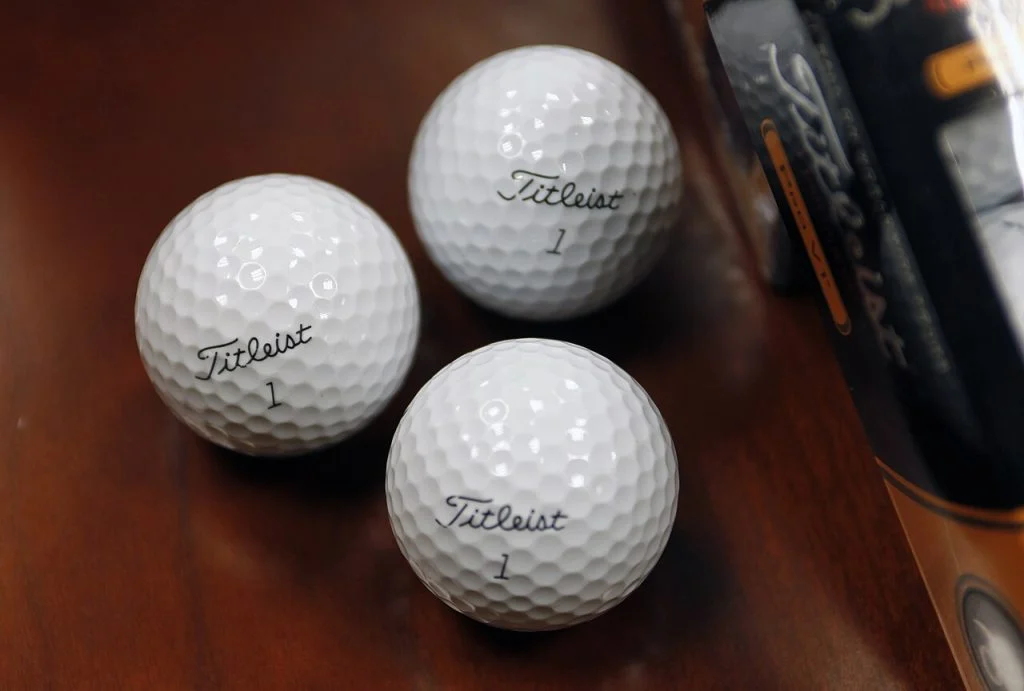
Quick answer: In the Pro V1 vs Pro V1x choice, the Pro V1 is the softer, three-piece ball with a mid flight. The Pro V1x is the firmer, four-piece ball that launches higher and spins more on full swings. Pick by flight and feel. Both cost the same.
What Is the Difference Between Pro V1 and Pro V1x?
The main difference is how each ball is built and how that build changes flight, spin and feel. The 2025 Pro V1 has three pieces and the 2025 Pro V1x has four. Titleist says the Pro V1 is the softer ball, while the Pro V1x launches higher and spins more on full swing shots.
Simple pick: Choose the Pro V1 for softer feel and a mid flight. Choose the Pro V1x for a higher flight and more stopping spin.
This comparison covers the 2025 generation of both balls. They launched at the same retail price, so cost should not push you toward one model over the other.
Pro V1 vs Pro V1x: How Do the Specs Compare?
The two balls share the same type of casing and cover. They differ in core design, piece count, dimple count, flight, feel and spin. The construction, dimple and price details below come from California Golf News.
| Feature | 2025 Pro V1 | 2025 Pro V1x |
|---|---|---|
| Construction | Three-piece | Four-piece |
| Core | High-gradient core | High-gradient dual core |
| Casing | High-flex casing | High-flex casing |
| Cover | Urethane elastomer | Urethane elastomer |
| Dimples | 388 tetrahedral | 348 tetrahedral |
| Flight | Mid trajectory | Higher launch |
| Feel | Softer | Firmer |
| Spin | Less than Pro V1x on full swings | More on full swings and on mid and short irons |
| Launch price | About $55 per dozen | About $55 per dozen |
These three terms explain most of the table:
- Core: The center of the ball, which strongly affects speed and feel.
- Casing: The layer between the core and the cover.
- Urethane cover: A soft outer layer used on premium balls to help create greenside spin.
Do not choose a ball by dimple count alone. A higher or lower number does not tell you which ball flies better. Dimples work together with the ball’s construction, so judge the actual flight you see with your own swing.
Which Ball Flies Higher and Goes Farther?
The Pro V1x flies higher, and the Pro V1 has a mid trajectory. Neither ball is the longer ball for everyone. Your distance depends on your swing speed, your launch angle and how the ball reacts to your strike.
Higher is not automatically longer. A golfer with a low ball flight may gain carry from extra height. A golfer who already hits it high may lose distance if shots climb too much and fall short.
For 2025, Titleist aimed to keep spin low off the tee for distance while adding spin on scoring clubs. That goal applied to the update of both models, so it does not make one ball the automatic distance winner.
Decision rule:
- If your shots fly low and you need more carry, try the Pro V1x.
- If your shots balloon, try the Pro V1 first.
Which Ball Spins More Around the Greens?
The Pro V1x generally spins more. It has higher spin off mid and short irons than the Pro V1, and Titleist says it also spins more on full swing shots.
The gap can change with the shot. Golf Monthly’s review found about 400 rpm more spin for the Pro V1x on a pitch. On a full 54-degree wedge, the two balls had very similar spin. That is one review, and your numbers may differ.
More spin has a trade-off. It can help a ball stop sooner on the green, but it can also magnify the curve of a poor full swing. A slice or hook may move farther offline when the ball carries more spin.
Decision rule: If your approach shots run too far after landing, try the Pro V1x. If curve is your bigger problem, start with the Pro V1.
Does the Pro V1 or Pro V1x Feel Softer?
The Pro V1 feels softer, and the Pro V1x is the harder of the two. Golf Monthly also describes the Pro V1x as designed to feel firmer.
Compression describes how much a ball squeezes under pressure. A higher reading usually means a firmer ball. Readings change by gauge and test, so only compare numbers taken in the same test.
As one lab’s measurement, MyGolfSpy’s Ball Lab measured the 2025 Pro V1x at a compression of 101 and rated it X-Firm. Do not treat that number as a universal spec.
Feel is personal, and it matters most on putts and short shots. If a firmer ball feels clicky or harsh to you, the Pro V1 is the natural choice. If the Pro V1 feels too soft, try the Pro V1x.
Does Swing Speed Decide Between Pro V1 and Pro V1x?
No. Swing speed alone should not settle this choice. Flight, spin and feel are better guides because you can see and feel them on the course.
So what swing speed do you need for a Pro V1x? None of the sources behind this guide sets a minimum. MyGolfSpy’s 2025 ball test data notes that the Pro V1x fits a wide range of swing speeds. It recommends the ball for golfers who want a higher flight with dependable stopping power.
Be careful with the idea that firmer balls are only for very fast swingers. Be just as careful with any chart that assigns one ball to one exact speed. Two golfers with the same swing speed can launch the ball very differently, so one may prefer the Pro V1 and the other the Pro V1x.
Should Beginners and Mid-Handicappers Play a Pro V1 or Pro V1x?
Most beginners and high handicappers who lose several balls per round should skip both. Mid-handicappers who keep a ball for most of a round are the better fit.
This is simple cost logic. At Golf Galaxy’s $57.99 per dozen listing, each ball costs about $4.83. A golfer who loses four balls in a round would spend about $19 on lost balls alone.
For a mid-handicapper, the better ball depends on your main need:
| Your situation | Start with |
|---|---|
| You want a softer feel | Pro V1 |
| Your shots tend to balloon | Pro V1 |
| Your full shots often curve too much | Pro V1 |
| Your ball flight is low | Pro V1x |
| Your approach shots do not stop quickly enough | Pro V1x |
| You like a firmer feel | Pro V1x |
When a premium ball makes sense
- You usually finish a round with the ball you started with, or close to it.
- You hit enough solid wedge shots to notice how the ball checks up.
- You want more control around the greens and the price fits your budget.
When to skip both
- You lose several balls in a typical round.
- You are still working on making consistent contact.
- You often play courses with a lot of water or thick trees.
- The cost makes you tense about losing a ball.
If you want a lower-cost option, read our Titleist Velocity vs Pro V1 comparison [LINK: add URL of existing Titleist Velocity vs Pro V1 article].
How Do You Choose Between Them on the Course?
Test both balls yourself, starting near the green and working back to the tee. The short game comes first because that is where these balls are most likely to justify their price.
- Buy one sleeve of each ball.
- Hit the same chips and pitches with each ball. Note how far each one rolls after landing.
- Roll the same putts with each ball and note which feel you prefer.
- Hit approach shots with the same clubs. Compare height and stopping distance.
- Hit tee shots last. Compare height, curve and where the ball finishes.
- Play the same holes in similar conditions, and write down what you see.
Look for patterns over several shots. One great strike or one mishit will not tell you much.
Final rule: If the results are close, pick the ball whose feel and flight you prefer, then stay with it. Playing one model all the time makes distance and greenside rollout easier to predict.
How Much Do Pro V1 and Pro V1x Cost?
The Pro V1 and Pro V1x are priced the same. Both 2025 models went on sale January 25, 2025, at about $55 per dozen, in white or yellow.
Golf Galaxy listed both models at $57.99 per dozen in November 2026. Prices change, so check the current listing before you buy.
Also check the model year on the box. The specs and test results in this guide apply to the 2025 balls, so a newer generation may differ.
Frequently Asked Questions About Pro V1 vs Pro V1x
Which ball is better for a golfer who slices or hooks, Pro V1 or Pro V1x?
Start with the Pro V1 if curve is your bigger problem. The Pro V1x generally spins more, and more spin can magnify the curve of a poor full swing. A slice or hook may move farther offline with extra spin. Test both balls to see which suits your swing.
Do the Pro V1 and Pro V1x have the same cover?
Yes. The 2025 Pro V1 and Pro V1x both use a urethane elastomer cover and a high-flex casing. A urethane cover is a soft outer layer that helps create greenside spin. The two balls differ in core design, piece count, dimple count, flight, feel and spin.
Does dimple count make the Pro V1 or Pro V1x better?
No. Dimple count alone does not tell you which ball flies better. The 2025 Pro V1 has 388 tetrahedral dimples, and the 2025 Pro V1x has 348. Dimples work together with the ball’s construction, so judge the actual flight you see with your own swing.
What is the compression of the Pro V1x?
MyGolfSpy’s Ball Lab measured the 2025 Pro V1x at a compression of 101 and rated it X-Firm. That is one lab’s reading, not a universal spec. Compression readings change by gauge and test, so only compare numbers taken in the same test. A higher reading usually means a firmer ball.
Should you switch between the Pro V1 and Pro V1x or stick with one?
Stick with one model once you have tested both. Playing the same ball all the time makes distance and greenside rollout easier to predict. If your test results are close, pick the ball whose feel and flight you prefer. Then stay with it instead of switching between rounds.
Do 2025 Pro V1 and Pro V1x specs apply to newer models?
Not necessarily. The specs and test results in this guide apply to the 2025 Pro V1 and Pro V1x, so a newer generation may differ. Check the model year on the box before you buy, and match it to the generation covered in any review you read.