
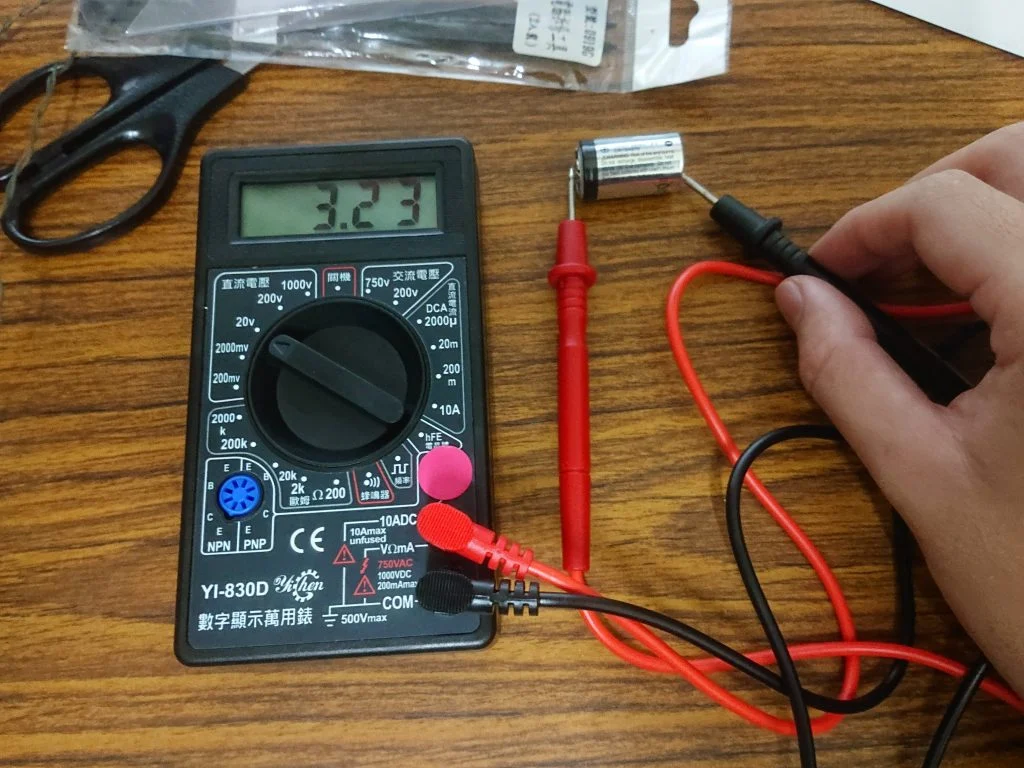
Quick answer: To test golf cart batteries, fully charge the pack, let it rest, and measure each battery with a DC voltmeter. On flooded batteries, confirm any suspect with a hydrometer. Correct the hydrometer reading for temperature, then compare your results to the battery maker’s chart before you replace anything.
How do you test golf cart batteries?
When you learn how to test golf cart batteries, the order of the tests matters. Follow this sequence:
- Disconnect loads and fully charge the pack.
- Disconnect the charger and let the pack rest.
- Measure and record each battery’s voltage.
- Measure total pack voltage.
- Check every cell of any flooded suspect with a hydrometer.
- Correct each hydrometer reading for temperature.
- Compare the results to the maker’s chart and to each other.
A multimeter finds suspects, and a hydrometer confirms them. Trojan says voltage alone does not confirm a problem, so don’t condemn a battery on one meter reading.
What do you need before testing, and how do you stay safe?
You need four basic items:
- A digital multimeter with a DC volts setting
- A battery hydrometer
- A thermometer for temperature correction
- A notepad for per-battery and per-cell readings
Trojan’s maintenance guidance calls for goggles, gloves and protective clothing when you handle batteries or electrolyte. Keep electrolyte off your skin. Work in a well-ventilated area away from sparks and flames.
Should you add water before testing golf cart batteries with a hydrometer?
No. Adding water before a hydrometer test skews the readings. Trojan lists excessive watering before testing as one possible reason for low results.
Which test fits which battery?
The hydrometer procedure is for flooded batteries only. For AGM, gel or lithium batteries, follow the maker’s own instructions. Do not apply the flooded chart below to those batteries.
How do you test a golf cart battery with a multimeter?
Set the meter to DC volts, touch the probes to each battery’s terminals, and write down every reading. Then measure the whole pack.
- Disconnect loads and the charger, then allow the correct rest time.
- Set the multimeter to DC volts.
- Put the red probe on the positive terminal and the black probe on the negative terminal.
- Record each battery’s voltage and its position in the pack.
- Record total pack voltage.
The rest period depends on what you want to learn:
- State of charge: Rest the battery with no charging or discharging for at least 6 hours, preferably 24, with loads disconnected. Use this reading with the chart below.
- Battery-to-battery comparison: Rest about 1 hour after a full charge. Use this reading only for Trojan’s spread check, explained later in this guide.
How to check total pack voltage
Put the red probe on the pack’s main positive terminal and the black probe on its main negative terminal. Those are the two end terminals of the series string. Our golf cart battery wiring diagram guide shows how to identify them.
How to check each battery in the pack
Measure across the positive and negative terminals of one battery at a time. Number the batteries on your notepad so you can find a suspect again. The individual readings should add up to about the same number as your pack reading.
Can you test golf cart batteries while they are connected?
Yes. You can leave the series cables in place and measure each battery at its terminals. But the charger and loads must be disconnected, and the pack must rest first. A reading taken during charging or under load will not match the chart.
What voltage should a golf cart battery read?
A fully charged Trojan 6V battery reads 6.37V at rest. These Trojan open-circuit voltage and specific gravity figures are per battery, with specific gravity corrected to 80°F. The last column is our multiplication of Trojan’s 6V figure by eight. It is not a manufacturer spec.
| State of charge | Specific gravity | 6V battery | 8V battery | 12V battery | Pack total, eight 6V (calculated) |
|---|---|---|---|---|---|
| 100% | 1.277 | 6.37V | 8.49V | 12.73V | 50.96V |
| 90% | 1.258 | 6.31V | 8.41V | 12.62V | 50.48V |
| 80% | 1.238 | 6.25V | 8.33V | 12.50V | 50.00V |
| 70% | 1.217 | 6.19V | 8.25V | 12.37V | 49.52V |
| 60% | 1.195 | 6.12V | 8.16V | 12.27V | 48.96V |
| 50% | 1.172 | 6.02V | 8.07V | 12.10V | 48.16V |
The chart stops at 50% because that is the deepest discharge Trojan recommends in normal use. Trojan’s figures apply to its own batteries, so check your brand’s chart if you own another make.
Decision rule: Trojan says to charge any battery that registers 0-70%. Do not judge battery health from a partly charged pack. Charge it fully, rest it, and test again.
What should a fully charged 48V golf cart battery pack read?
A rested, fully charged 48V pack of Trojan batteries works out to about 51V. These totals multiply Trojan’s per-battery figures at 100% charge. They are not manufacturer specs.
| Pack layout | Nominal pack voltage | Calculated total at 100% |
|---|---|---|
| Six 6V batteries | 36V | 38.22V |
| Eight 6V batteries | 48V | 50.96V |
| Six 8V batteries | 48V | 50.94V |
| Four 12V batteries | 48V | 50.92V |
What should a 6-volt golf cart battery read when fully charged?
Trojan lists 6.37V for a fully charged 6V battery after the required rest. A reading of 6.19V or lower falls in Trojan’s 0-70% range, so charge that battery before you draw any conclusions.
How do you use a hydrometer on a golf cart battery?
Draw electrolyte from each cell, record the reading, and return the electrolyte to the same cell. Trojan’s flooded-battery procedure works like this:
- Put on your safety gear and remove the vent caps.
- Rinse the hydrometer by filling and emptying it 2-4 times.
- Draw enough electrolyte to float the float fully.
- Record the reading and the cell number.
- Return the electrolyte to the same cell.
- Repeat for every cell.
- Replace the vent caps and wipe up any spills.
How do you correct a hydrometer reading for temperature?
Add 0.004 for every 10°F above 80°F. Subtract 0.004 for every 10°F below 80°F.
Example: A reading of 1.270 at 100°F is 20°F above the reference point. That is two steps of 0.004, or 0.008. The corrected reading is 1.278.
Compare corrected readings across cells, not just to the chart. A cell that lags behind its neighbors can tell you more than one number on its own.
What do hydrometer readings mean?
What is a good hydrometer reading for a golf cart battery?
A reading of 1.277 or higher at 80°F indicates full charge for most Trojan batteries. Trojan’s FAQ also lists 1.285 ± 0.007 at 80°F after charging for deep-cycle models. Check the spec for your exact model.
How much difference between cells is too much?
A spread above 0.030 between cells after a full charge calls for equalization and a retest. Don’t make a replacement decision until you have done both.
What do low-cell patterns point to?
If readings stay below spec after charging and equalizing, Trojan lists five possible causes: old age, prolonged discharge, electrolyte loss, a weak or failing cell, or excessive watering before the test. Trojan does not assign these causes to specific patterns, so treat the guide below as a starting point.
- One low cell in an otherwise good battery: This points first to a weak or failing cell. Also ask whether that cell lost electrolyte or got extra water before the test.
- All cells low: A problem shared by the whole battery fits better here, such as old age, prolonged discharge, or watering every cell before the test.
How do you find the bad battery in a golf cart pack?
Fully charge the pack, rest it about 1 hour, and compare every battery’s voltage. The battery that stands apart becomes your suspect. Then confirm it with a hydrometer if it is flooded.
- Disconnect loads.
- Fully charge the pack.
- Disconnect the charger.
- Rest the pack about 1 hour.
- Measure each battery and find the difference between the highest and lowest readings.
- Check that difference against Trojan’s limit for your battery voltage.
Trojan says a spread above 0.15V on 6V batteries or 0.22V on 12V batteries indicates a problem. For example, if a set of 6V batteries runs from 6.20V to 6.38V, the spread is 0.18V. That is over the limit, so the 6.20V battery needs a closer look.
For 8V batteries, ask the maker for its limit. You can still look for the battery that stands apart and check its cells with a hydrometer.
| Reading pattern | Likely meaning | Next action |
|---|---|---|
| Voltage spread within the limit and specific gravity at spec | Testing shows no imbalance | If the cart still runs weak, arrange a discharge test |
| Voltage spread over the limit and low specific gravity in that battery | The suspect is supported by both tests | Equalize if flooded, then retest |
| Voltage spread over the limit but specific gravity at spec | Problem not confirmed | Charge fully and repeat both tests |
| Cell spread above 0.030 after full charge | Cells are uneven | Equalize and retest |
| Still below spec after charging and equalizing | Aged or failing battery is possible | See a specialist or retire the battery |
Do you need a load test if the voltage looks fine?
Yes, if the cart still lacks power or range. Open-circuit voltage shows a battery’s resting state. It does not show how the battery performs under demand.
Can a golf cart battery show good voltage and still be bad?
Yes. Trojan says a battery that charges but cannot hold a load is likely bad and should be tested.
How do you judge a golf cart battery load test?
Compare the result to your battery model’s published rating. For example, the Trojan T-105 6V flooded battery is rated at 115 minutes at 75 amps and 447 minutes at 25 amps. The rating shows how run time changes with the load, so a test result only means something at a stated current.
There is no universal percentage-drop pass or fail number that we could verify as a standard. Be wary of one-size-fits-all rules, and ask for the test method and the rating used for comparison.
Have a shop run a discharge test in any of these cases:
- Voltage and specific gravity look fine, but the cart still loses power or range.
- Your voltage and hydrometer results disagree after a retest.
- You have sealed batteries and can’t use a hydrometer.
- You want confirmation before paying for a new pack.
What should you do after testing: charge, equalize or replace?
Work through these decision rules in order:
- If the battery reads low, charge it fully and retest.
- If a flooded battery is still low or uneven, equalize it and retest.
- If it is still below spec, have a specialist check it or retire it.
- If it is cracked, leaking or damaged, replace it.
Equalization is for flooded batteries only. Take specific gravity readings every hour during the process. It is complete when specific gravity stops rising during gassing. Our golf cart battery revival guide covers this in more detail.
Replacing one battery may look cheaper, but there is a trade-off. Trojan does not recommend partial replacement of flooded banks, because mixed-age batteries respond differently and can cause incorrect charge termination.
To protect the pack after testing, keep discharges to 50% or less when you can. Trojan gives 80% as the maximum safe discharge. Our golf cart battery lifespan guide explains more ways to extend battery life.
Frequently Asked Questions
How long should golf cart batteries rest before testing?
Rest golf cart batteries at least 6 hours, and preferably 24 hours, before checking state of charge. Keep loads disconnected, with no charging or discharging during that time. If you only want to compare batteries using Trojan’s spread check, rest the pack about 1 hour after a full charge.
Can you use a hydrometer on AGM, gel or lithium golf cart batteries?
No. The hydrometer procedure is for flooded batteries only. For AGM, gel or lithium golf cart batteries, follow the battery maker’s own testing instructions, and do not use a flooded battery chart. If you have sealed batteries and can’t use a hydrometer, a shop can run a discharge test instead.
How much voltage difference between golf cart batteries is too much?
Trojan says a spread above 0.15V on 6V batteries or 0.22V on 12V batteries indicates a problem. Measure after a full charge and about 1 hour of rest. For 8V batteries, ask the maker for its limit, and check any battery that stands apart with a hydrometer.
Should you replace one golf cart battery or the whole pack?
Trojan does not recommend replacing only part of a flooded battery bank. Mixed-age batteries respond differently and can cause incorrect charge termination. Replacing one battery may look cheaper, but that is the trade-off. Confirm the failure first by charging, equalizing and retesting.
When is equalizing a golf cart battery finished?
Equalizing is complete when specific gravity stops rising during gassing. Take specific gravity readings every hour during the process to see when that happens. Equalization is for flooded batteries only. After it finishes, retest the battery, and if it is still below spec, have a specialist check it or retire it.
How deep should you discharge golf cart batteries?
Keep golf cart battery discharges to 50% or less whenever you can. Trojan gives 80% as the maximum safe discharge, and its voltage chart stops at 50% because that is the deepest discharge it recommends in normal use. These figures apply to Trojan batteries, so check your brand’s guidance.