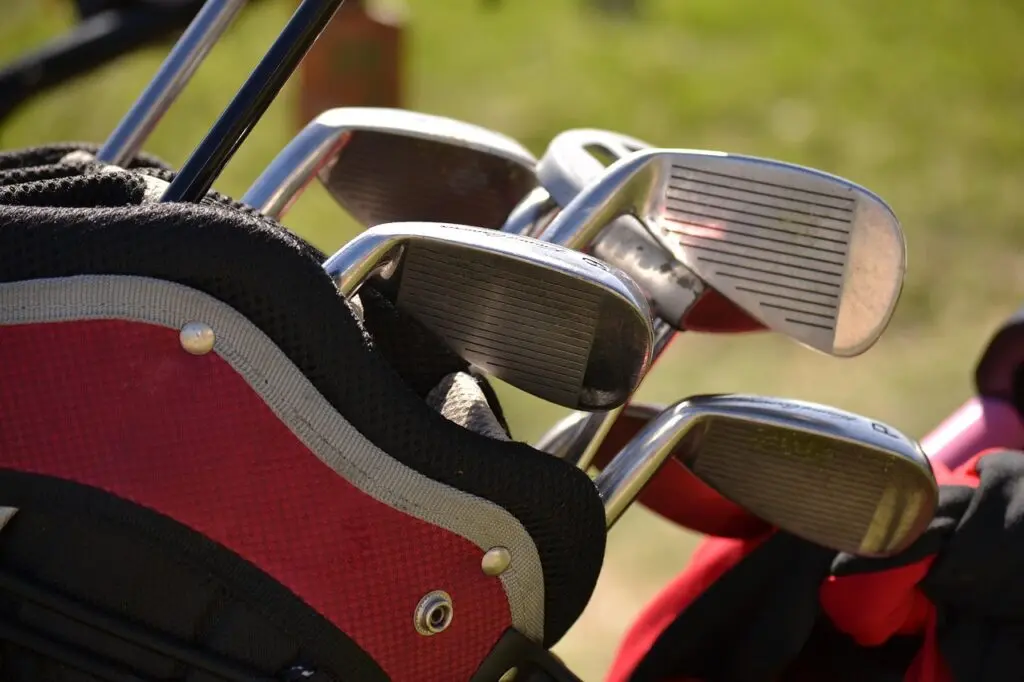
Choose the Ping i230 if you want distance control and feel, and the i530 if you want more yards from a compact, players’-style head. In the Ping i230 vs i530 matchup, the i230 is a one-piece cast players’ iron built for control and shot shaping. The i530 is a hollow players’ distance iron with stronger lofts and a flexible forged face for more ball speed.
Ping i230 vs i530: Which One Should You Buy?
Here is the simple rule. If you hit the center of the face often and care most about flying the ball a predictable distance, pick the i230. If you want extra carry but still want a clean, blade-like look at address, pick the i530.
Both irons have now been replaced. Ping launched the i540 as the i530’s successor on March 10, 2026, and the i240 is the reported successor to the i230. If you buy either model today, you are most likely buying a used or closeout set.
How Do the i230 and i530 Compare Side by Side?
The table below uses only specs from Ping’s i530 spec chart, GOLF.com’s i230 first look, TGW’s i230 review and Golf Galaxy’s i530 listing. Where a spec wasn’t available in those sources, the table says so. It doesn’t guess.
| Spec | Ping i230 | Ping i530 |
|---|---|---|
| Category | Players’ iron | Players’ distance iron |
| Construction | One-piece cast 431 stainless steel body with an activated elastomer insert | Forged C300 maraging steel face welded to a hollow 17-4 stainless steel body |
| 7-iron loft (standard) | 33° | 29.0° |
| 7-iron length | 37″ | 37″ |
| 7-iron lie / offset | Not listed in our sources | 62.0° lie / 0.12″ offset |
| Weighting | Tungsten toe and tip weights to raise MOI and lower the center of gravity | Not detailed in our sources |
| Set makeup | Includes 3-5 long irons (check Ping for the full range) | 4-iron through PW plus a 47° UW |
| Power Spec / Retro Spec 7-iron | Check with Ping or a fitter | 27.5° / 31.0° |
| Launch price | $203 per club (steel), $230 per club (graphite) | Not listed in our sources |
| Current status | Being replaced by the i240 | Fill-in or replacement only; replaced by the i540 |
Why Does the i530 Hit the Ball Farther?
The i530 goes farther mainly because of loft. Its face design adds ball speed on top of that. Understanding both parts helps you judge whether the extra yards are worth the trade-offs.
What Is the Loft of the Ping i530 7-Iron?
The Ping i530 7-iron has a standard loft of 29.0°. Ping also offers it at 27.5° (Power Spec) for more distance or 31.0° (Retro Spec) for a more traditional loft.
How Much Longer Is the Ping i530 Than the i230?
There is no fixed yardage gap. It depends on your swing speed and strike. What you can measure is loft: the i530’s 29° 7-iron is about 4° stronger than the i230’s 33° 7-iron. That puts an i530 7-iron closer to an i230 6-iron, so expect roughly a club’s worth of extra distance from loft alone.
Testing backs up the distance edge. In MyGolfSpy’s testing, the i530 placed 2nd in distance among 18 players’ distance irons.
How Does the i530’s Face Add Ball Speed?
The i530 pairs a thin, forged maraging steel face with a hollow body. Because nothing sits directly behind the face, it can flex more at impact. That flex returns energy to the ball, which raises ball speed compared with a solid cast head.
What Is the Trade-Off With Stronger Lofts?
Stronger lofts can open bigger yardage gaps at the bottom of your bag. The i530 PW is 42.0° and its UW is 47.0°. After that, look at your next wedge. If the jump in loft is too big, you may have a distance gap that no full swing fills.
Before you buy, write down your wedge lofts and check that the spacing from PW to UW to your next wedge stays even.
Which Iron Is More Forgiving for Mid-Handicappers?
Neither iron is a true forgiveness club, and test results favor the i230 slightly for consistency. Both help on off-center hits in different ways.
Is the Ping i530 More Forgiving Than the i230?
Not clearly. In MyGolfSpy’s testing, forgiveness was the i530’s weakest category. The i230 ranked 2nd of 19 players’ irons with consistent results across accuracy, distance and forgiveness.
- i230: A light elastomer insert (about 3 g) replaces about 24 g of steel. Ping moves that saved weight into tungsten toe and tip weights. That raises MOI (resistance to twisting) and lowers the center of gravity. It is still a players’ iron and rewards a fairly consistent strike.
- i530: The hollow head and flexible face help hold ball speed on mishits. But the compact head limits how much it can resist twisting on bad strikes.
Is the Ping i530 a Game Improvement Iron?
No. The i530 is a players’ distance iron. It gives you game-improvement-style lofts and speed in a smaller, cleaner head. It does not offer the wide sole, thick topline and large sweet spot of a true game improvement iron.
Decision rule: If you need maximum forgiveness, skip both and look at Ping’s G-series irons instead.
How Do They Differ in Feel, Look and Workability?
The i230 looks and plays more like a classic tour iron. The i530 looks modern and compact but is built for speed more than shaping.
What Makes the i230 Feel Like a Players’ Iron?
- Tour-style shape with a shorter blade length on the 3-5 irons.
- A multi-material back badge to tune sound and feel.
- Micromax grooves and a Hydropearl 2.0 finish.
- A more rounded leading edge with extra bounce, which helps the club move through turf.
Against the older i210, GOLF.com found the i230 7-iron gained about 1 mph of ball speed with similar launch and slightly less spin. That is a small step, not a big leap.
How Does the i530 Look at Address?
The i530 has a compact, blade-style hollow head. MyGolfSpy noted it looks more compact and blade-like than the i525 it replaced. If you dislike bulky distance irons, this is its main appeal.
Which Iron Stops the Ball Better on Greens?
Lower lofts usually mean less spin and a flatter landing. That can make the i530 harder to stop on firm greens, especially for slower swingers. During a fitting, check spin and descent angle on a launch monitor for both irons, not just carry distance.
Who Should Choose the Ping i230?
The i230 suits golfers who strike the ball well and want control, feedback and predictable distances.
What Handicap Is the Ping i230 For?
The i230 fits best with golfers from roughly single digits to the low teens. Strike quality matters more than the number on your card. If you find the center of the face most of the time and want to shape shots, it will reward you. If your misses are big and frequent, it will feel demanding.
Is the i230 a Good Upgrade From the i210?
It is a natural next step, with a similar look and a small speed gain. For a full breakdown of the older model, see our Ping i210 guides [INTERNAL LINK: Ping i210 articles].
Who Should Choose the Ping i530?
The i530 suits golfers with moderate swing speed who want more carry without a chunky head. It works best if you hit the ball solidly but feel short with traditional lofts.
Can You Combo the Ping i230 and i530?
Yes, a combo set is a reasonable fitting option. A common idea is i530 long irons for easier launch and speed, with i230 short irons for control and spin into greens. Treat this as something to try at a fitting, not a sure thing.
The catch is loft. The i530 runs about 4° stronger per club at standard specs. Where the two sets meet, you may get a large gap or almost no gap. A fitter can adjust lofts so the yardages flow evenly.
Should You Buy Used i230/i530 or the New i240/i540?
Buy used if you find a well-kept set at a fair price and it fits you. Buy new if you want the latest design, a full set from the factory and custom specs.
What Replaced the Ping i530 and i230?
The i540 replaced the i530. Ping launched it on March 10, 2026, at $235 per steel iron. It moves tungsten low along the sole for a lower center of gravity than the i530.
The i240 is the i230’s successor. MyGolfSpy reported Ping tour-testing the i240 as the expected replacement.
Can You Still Buy a New i530 Set?
Mostly no. Ping now lists the i530 for fill-in or replacement only, through authorized retailers and with a valid serial number. That means you can replace a lost or broken club, but most buyers will find full sets used or on closeout.
What Should You Check Before Buying a Used Set?
- Check the color code on the hosel to see the lie angle.
- Confirm the shaft model and flex match what you play.
- Look at groove wear, especially on the short irons.
- Confirm which clubs are in the set and their lofts.
- Get a lie check from a fitter after you buy.
How Do You Get Fitted for Either Iron?
A fitting is the fastest way to settle this choice. Follow these steps so you compare the irons fairly.
- Bring your current 7-iron as a baseline.
- Hit the i230 and i530 7-irons back to back.
- Compare average carry, not your single best shot.
- Compare how tight your distance spread is with each iron.
- Check spin and peak height to see which stops the ball better.
- Ask whether Power Spec or Retro Spec lofts would improve your gapping.
- Confirm your lie angle with a Ping color code fitting.
- Check the gap from your PW to your wedges before you order.
If the fitter has the i240 or i540 on hand, hit those too. You will see whether the newer models are worth the extra cost over a used set.
Frequently Asked Questions
Is the Ping i230 forged?
No. The Ping i230 is a one-piece cast iron made from 431 stainless steel. It uses a light activated elastomer insert behind the face, and Ping moves the saved weight into tungsten toe and tip weights. That design raises MOI and lowers the center of gravity while keeping a players’ iron shape.
What is the loft of the Ping i230 7-iron?
The Ping i230 7-iron has a standard loft of 33° and a length of 37 inches. That is about 4° weaker than the i530’s 29° 7-iron. As a result, the i230 7-iron flies shorter and is built more for control, spin and predictable distances than for maximum yardage.
What are the lofts of the Ping i530 pitching wedge and utility wedge?
At standard specs, the Ping i530 pitching wedge is 42.0° and the utility wedge is 47.0°. Because these lofts are strong, check the gap from the UW to your next wedge before you buy. If that jump is too big, you may end up with a distance gap that no full swing fills.
How much does the Ping i540 cost?
The Ping i540 launched on March 10, 2026, at $235 per steel iron. It replaced the i530 and moves tungsten low along the sole for a lower center of gravity. If a used i530 set fits you and is fairly priced, it can be a cheaper alternative to buying the newer model.
Is the Ping i530 a good choice for slower swing speeds?
It can be, but test it first. The i530 suits golfers with moderate swing speed who want more carry from a compact head. Its strong lofts usually mean less spin and a flatter landing. That can make it harder for slower swingers to stop the ball on firm greens.