Quick answer: In the cavity back vs blade irons choice, most beginners and mid-handicappers should play cavity backs. They forgive off-center hits, launch higher and keep more distance on mishits. Blades suit consistent ball-strikers who hit the same spot on the face and shape shots on purpose. If your handicap is over 10, start with cavity backs.
Cavity Back or Blade Irons: Which Should You Play?
Play cavity backs if you are a beginner or a mid-handicapper. Consider blades only if you strike the ball very consistently and like to work it left and right.
Clubfitters agree on this. Tim Briand of True Spec Golf says no reputable clubfitter would recommend a forged muscleback blade for a player over a 10-handicap.
Here is the trade-off. Cavity backs give you forgiveness, height and distance. Blades give you feel, feedback and more control over ball flight. Most golfers score better with the first set of benefits.
What Is the Difference Between Cavity Back and Blade Irons?
The difference is where the weight sits. A blade puts its mass behind the center of the face. A cavity back moves weight out to the edges of the head. That change decides how the club reacts when you miss the center.
What is a blade (muscle back) iron?
A blade, also called a muscle back, has a solid back with extra mass right behind the center of the face. “Blade” and “muscle back” mean the same type of iron.
You can spot one at address. Blades have a thin topline, a narrow sole and less offset. Forged blades are prized for their clean looks and their feel on center strikes.
What is a cavity back iron?
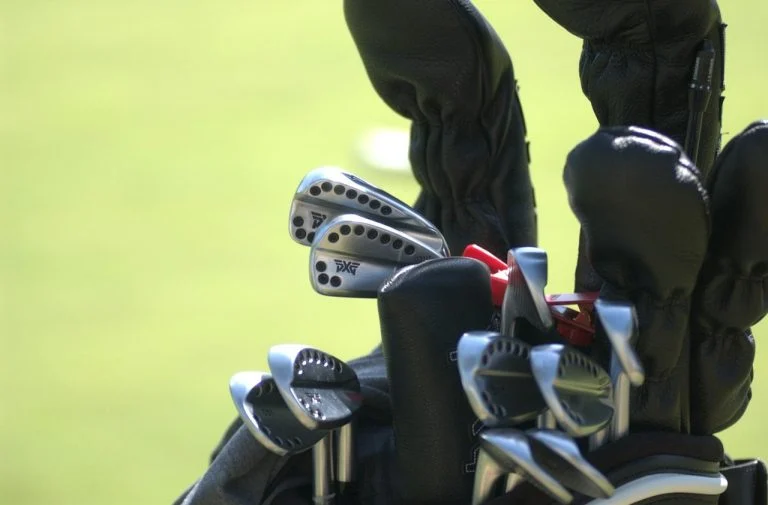
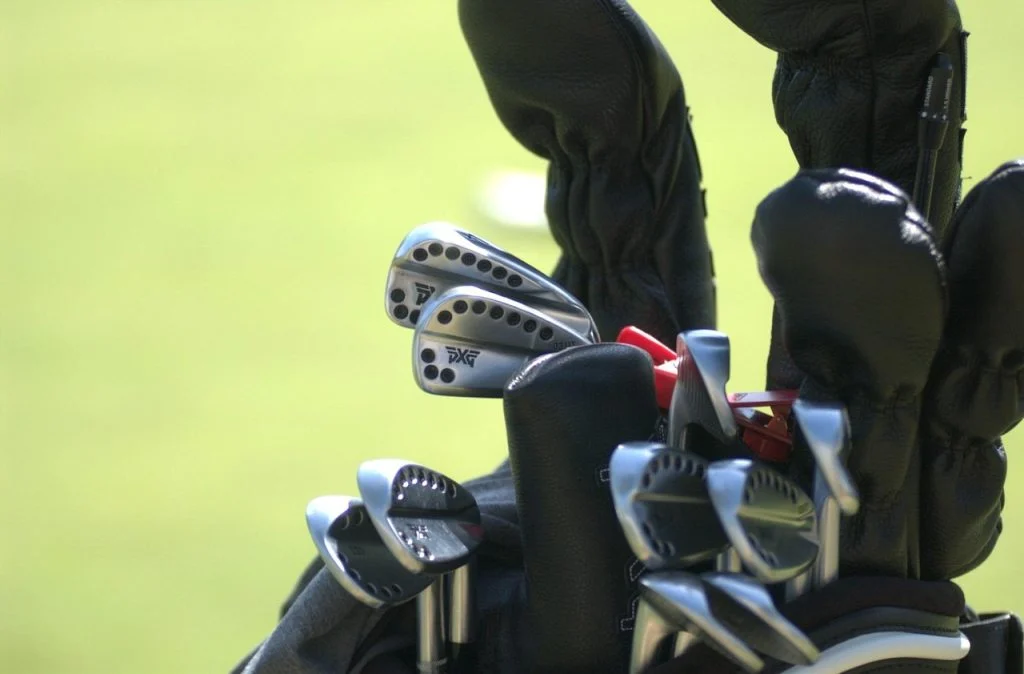
A cavity back has material removed from the back of the head. That weight is moved to the edges, which is called perimeter weighting. Cavity backs usually have a thicker topline and a wider sole.
Perimeter weighting raises the club’s MOI. Moment of inertia (MOI) is a clubhead’s resistance to twisting. Higher MOI means more forgiveness on off-center hits and a more consistent ball flight.
For the full physics, read [INTERNAL LINK: Why Are Blades Harder To Hit].
Cavity Back vs Blade Irons: Side-by-Side Comparison
This table compares the two designs on the points that matter most when you choose a set.
| Factor | Cavity back | Blade (muscle back) |
|---|---|---|
| Forgiveness | High. Weight on the perimeter resists twisting. | Low. Small margin for error. |
| Off-center ball speed | Holds more speed on mishits | Loses more speed on mishits |
| Launch and height | Easier to launch high | Lower and more controlled |
| Distance | More distance for most golfers | Shorter, especially on mishits |
| Feel and feedback | Softer feedback on misses | Clear feedback on every strike |
| Workability | Slightly less | More control over trajectory and shape |
| Looks at address | Thicker topline, wider sole | Thin topline, narrow sole, less offset |
| Typical player | Beginners and mid-handicappers | Low-handicap, consistent ball-strikers |
How Much Do You Lose on Mishits With Blades?
You lose real ball speed, even as a very good player. GOLF.com’s Jake Morrow, a +0.3 handicap, compared Wilson Staff Model blades with cavity backs on a simulator. On his worst three shots, the blade lost about 6-7 mph of ball speed compared with the cavity back.
Lost ball speed shows up on the course in two ways:
- Shots come up short. Less speed means less carry, so a mishit can land in the front bunker instead of on the green.
- Distance control gets shaky. Good strikes and poor strikes fly very different distances, so you can’t trust your yardages.
Keep in mind who ran this test. A better-than-scratch player still paid a clear penalty on his misses. A mid-handicapper misses the center more often, so the penalty shows up on more shots.
Who Should Play Blade Irons?
Blades fit a small group of golfers. You are a good candidate only if all three of these are true:
- You hit the same spot on the face again and again.
- You shape shots on purpose, like a planned fade or a low draw.
- You value feedback and control more than forgiveness.
Briand points to research showing that a golfer’s ability to strike the same spot on the face declines as skill level drops. He says blades suit shotmakers who shape shots on purpose.
What handicap should you be to play blades?
Use 10 as the cutoff. Fitter guidance says players over a 10-handicap should not be in forged muscleback blades. Being under 10 doesn’t mean you should switch. It only means blades are worth testing.
Will playing blades make me a better ball striker?
No. Some golfers think blades will “teach” them to find the center because misses feel bad. GOLF.com calls the idea that average golfers will learn to hit the ball better by switching to blades absurd. Practice and lessons improve your strike. Harsher clubs just make your misses cost more.
Do blade irons go shorter than cavity backs?
Yes, for most players. PGA Tour winner Kevin Na played blades in his early 20s and now plays cavity backs. He says blades go shorter and off-center hits perform worse.
Who Should Play Cavity Back Irons?
Cavity backs are the right call for most golfers. That includes:
- Beginners
- Mid-handicappers
- Golfers with slower swing speeds who need help getting the ball up
- Anyone whose strikes spread across the face, from heel to toe
Cavity backs add forgiveness, distance and height. That combination helps more of your shots reach the target. The trade-off is slightly less workability, which most mid-handicappers won’t miss.
Should a beginner play cavity back or blade irons?
A beginner should play cavity backs. New golfers miss the center often, and cavity backs protect distance and height on those misses. That makes the game more fun and makes progress easier to see.
Note that cavity backs are not one size. They range from chunky, very forgiving heads to compact designs that look closer to a blade. To pick the right type, see [INTERNAL LINK: Game Improvement vs Players Distance Irons].
Are There Irons That Split the Difference?
Yes. You have two middle options: blade-look irons with cavity-back forgiveness, and combo sets that mix both designs.
Are there irons that look like blades but are forgiving?
Yes. According to GOLF.com, irons such as the Ping iBlade and TaylorMade P790 look like blades but offer cavity-back forgiveness. They suit golfers who want a cleaner look at address without the full blade penalty.
What is a combo iron set?
A combo set mixes iron types in one bag. A common setup uses blade short irons for control and cavity-back long irons for forgiveness. Many top players carry combo sets.
The logic is simple. Short irons are easier to strike well, so control matters more. Long irons are harder to hit, so forgiveness matters more.
Do combo sets cause distance gaps?
They can. A blade and a cavity back with the same loft can fly different distances. Where the two designs meet in your set, you may get a gap that is too big or too small.
Bending lofts can fix the gap, but it can also change the bounce. That affects how the club moves through turf. GOLF.com advises seeing a fitter or sticking with a matched set.
So is a combo set a good idea? It can be for skilled players who get fitted. For most mid-handicappers, a single well-fitted cavity back set is simpler and keeps gaps even.
Why Did Cavity Back Irons Take Over?
Perimeter weighting made irons easier to hit, and golfers noticed. In 1969, Karsten Solheim of Ping unveiled the K1 perimeter-weighted irons. They were investment cast, with molten metal poured into molds, rather than forged. Players saw them as “game improvement” clubs that were more forgiving than traditional blades.
The Ping Eye2 came later and proved the idea at the top level. John Daly won the 1991 PGA Championship with Ping Eye2 perimeter-weighted irons.
Do pros use cavity back irons?
Yes. Kevin Na now plays cavity backs, and many tour players use cavity backs in their long irons as part of a combo set. Even elite players switch back and forth. Rory McIlroy briefly switched to TaylorMade P7CB cavity backs, then went back to his RORS PROTO blades before his first PGA Tour start of 2026.
The lesson: even the best players test both designs. The choice depends on the player, not on what looks “pro.”
How to Choose: A 4-Step Decision Rule
Follow these steps in order. Stop at the first step that gives you a clear answer.
- Check your handicap. If it’s over 10, start with cavity backs. That matches fitter guidance.
- Check your strike pattern. Put face tape or foot powder spray on your irons, or use launch monitor data. If your marks spread across the face, choose cavity backs. If they cluster tightly in the center, blades are worth a test.
- Hit both types and judge your worst shots. Your best shots will look similar with either club. Compare ball speed and carry on your misses. The club that keeps your bad shots playable is usually the better choice.
- Get fitted. This matters most before you buy a combo set. A fitter can check lofts and bounce so your distance gaps stay even.
Ready to shop for a forgiving set? Read [INTERNAL LINK: Ping i210 Replacement] and our [INTERNAL LINK: Wilson Dynapower Review] next.
Cavity Back vs Blade Irons: FAQ
Is a combo set of blades and cavity backs a good idea?
A combo set can be a good idea for skilled players who get fitted. It usually pairs blade short irons for control with cavity-back long irons for forgiveness. The risk is uneven distance gaps where the two designs meet. Most mid-handicappers do better with one well-fitted cavity back set.
What does MOI mean for golf irons?
MOI, or moment of inertia, is a clubhead’s resistance to twisting. Cavity backs move weight to the edges of the head, which raises MOI. Higher MOI means the face twists less on off-center hits. You get more forgiveness and a more consistent ball flight than with a blade.
How can I tell if my strike is consistent enough for blades?
Put face tape or foot powder spray on your irons, or check launch monitor data, then hit a series of shots. If the marks spread from heel to toe, cavity backs are the better fit. If they cluster tightly in the center, blades are worth testing.
Are cavity back irons less workable than blades?
Yes, slightly. Blades give more control over trajectory and shot shape, which helps players who fade or draw the ball on purpose. Cavity backs trade a little workability for forgiveness, height and distance. Most mid-handicappers gain more from that forgiveness than they lose in shot-shaping control.
Do blades give better feedback than cavity backs?
Yes. Blades give clear feedback on every strike, so you know where you hit the face. Cavity backs give softer feedback on misses. That feedback alone won’t improve your strike, though. Practice and lessons do that, while a blade simply makes each miss cost more distance.