Quick answer: In the game improvement vs players distance irons choice, pick game improvement if you need more launch, more help on mishits or more help squaring the face. Consider players distance if you strike the ball consistently, have enough speed to launch and stop it, and want a smaller head with less offset.
Should You Buy Game Improvement or Players Distance Irons?
Use this rule for a fast decision:
- Most buyers: Start with game improvement irons if you hit it low, strike it all over the face or struggle to square the face.
- Better strikers: Test players distance irons if your contact is repeatable and you can land the ball steeply enough to hold greens.
- Unsure: Book a fitting or try a blended set.
GolfBox calls the usual low, mid and high handicap rule too simplistic. Swing speed and strike consistency matter more than handicap alone. Descent angle and 7-iron loft then tell you whether a set really fits.
What Is the Difference Between Game Improvement and Players Distance Irons?
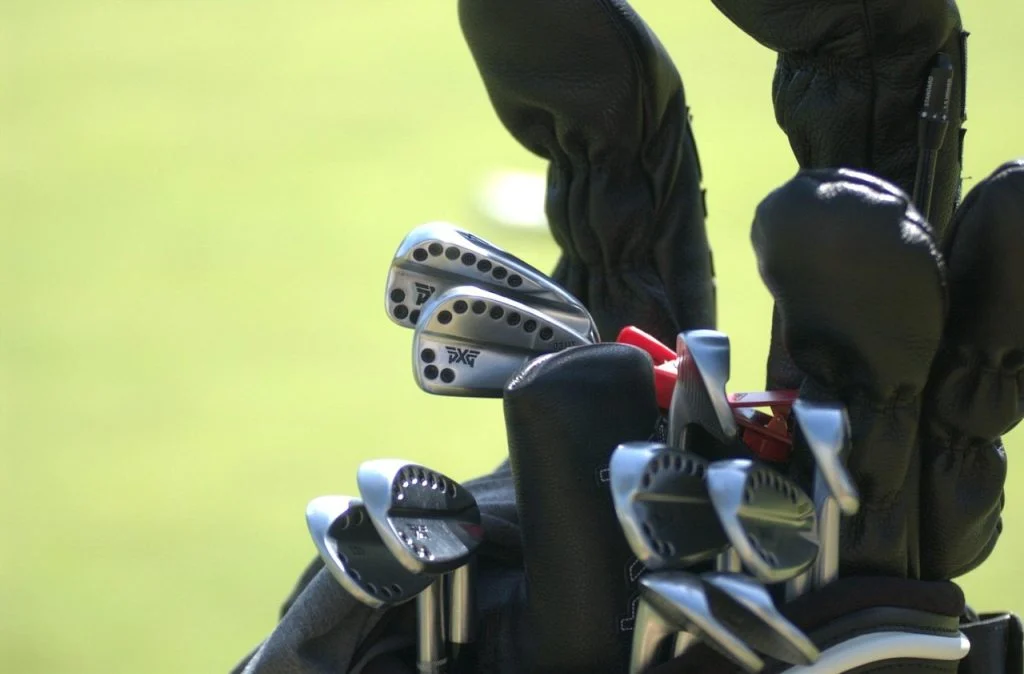
Game improvement irons are designed to maximize forgiveness and distance, with higher launch and a large offset. Players distance irons add distance through thin faces or hollow-body designs while keeping the look of an iron a tour pro might play.
GolfBox says most players distance irons are hollow body irons with thin, flexible faces. Their compact heads are the same size as or slightly larger than players irons.
| Feature | Game improvement | Players distance |
|---|---|---|
| Head size | Larger | Compact |
| Offset | More | Less |
| Sole | Usually wider | Usually thinner |
| Construction | Built for forgiveness and distance | Mostly hollow-body with a thin, flexible face |
| Launch | Higher | Usually lower; varies by model |
| Heel-toe forgiveness | More | Somewhat less |
| Workability | Less | More |
| Best-fit golfer | Needs launch, mishit help or face-squaring help | Consistent striker with enough speed to launch and stop the ball |
Category labels are marketing groups, and they vary by brand. GolfBox names the TaylorMade Qi as a game improvement example and the TaylorMade P790 as a players distance example. Another brand may draw the line in a different place, so judge each set by its specs and your numbers.
Game Improvement vs Players Distance Irons: Which Go Farther?
The best available test does not settle this matchup directly. In 7-iron testing from Golf Digest’s 2024 Hot List process, game improvement irons carried an average of 6.1 yards farther than players irons. Some players gained as much as 16 yards.
Warning: That test compared game improvement irons with players irons. It did not directly measure players distance irons, so do not apply the 6.1-yard gap to this choice.
The same test found game improvement 7-irons flew about as high as players irons. Their average apex was one yard lower, despite stronger average lofts.
Do Players Distance Irons Have Stronger Lofts?
Not as a fixed rule. Loft varies by model, so the number on the sole can mislead you. Callaway lists its hollow-body 2024 Apex Ai200 7-iron at 30 degrees and its 2024 Paradym Ai Smoke MAX Fast 7-iron at 31 degrees.
Two models cannot define a category, but they show that one “7” is not the same as another. Compare these three numbers instead:
- 7-iron loft
- Average carry
- Landing angle
Which Irons Are More Forgiving?
Game improvement irons are generally the safer choice for heel-toe misses. GOLF.com says the smaller profile of players distance irons reduces heel-toe forgiveness somewhat, though golfers will not give up much with current technology. The loss is real but may be modest, and your own miss pattern decides how much it matters.
Forgiveness and dispersion are different things. Forgiveness is how well a mishit holds up. Dispersion is how tightly your shots group.
Golf Digest found game improvement irons did not deliver better dispersion across the board. Many better players grouped shots as tight or tighter with players irons. Neither category always produces tighter groups, so measure yours.
Offset also matters. More offset gives built-in help returning the face to square. GOLF.com says the lower offset of players distance irons removes some of that help but makes the ball easier to work both ways.
Check the actual spec rather than assuming. Callaway lists the two 7-irons above at 3.1 mm of offset for the Apex Ai200 and 3.4 mm for the Paradym Ai Smoke MAX Fast.
None of the test data cited here ranks the most forgiving players distance irons. To find the best one for you, compare how your off-center shots hold up in carry and direction.
Will Your Irons Hold the Green?
Iron descent angle is how steeply the ball comes down as it lands. GOLFTEC gives 45-47 degrees as the ideal 7-iron descent angle. In one fitting, a golfer’s old irons averaged about 40 degrees, which made greens difficult to hold.
GOLFTEC names three ways to steepen descent:
- Increase ball speed.
- Increase backspin.
- Increase launch angle.
Tim Briand of True Spec Golf advises slower-swinging golfers to test players distance irons thoroughly first, as reported by GOLF.com. They may not be able to stop the ball on greens as well as they should.
Decision rule: Reject any set that adds carry but lands too flat for you to hold greens. Extra yards do not help if the ball runs through the back.
Which Type Fits Your Swing?
Match your swing traits to this table. If your answers point both ways, test both types or try a blended set.
| Your swing | Start with | Why |
|---|---|---|
| Slower swing and low flight | Game improvement | Higher launch helps the ball get up and stop |
| Frequent heel-toe misses | Game improvement | More heel-toe forgiveness |
| Steep delivery | A wider sole, often game improvement | Helps keep turf contact consistent |
| Shallower delivery | A thinner sole, often players distance | A thinner sole becomes more useful |
| Consistent ball striking | Players distance test | You rely less on heel-toe help |
| Preference for a compact look | Players distance or blended | Smaller head and less offset, if your numbers hold up |
The handicap rule of thumb says high handicappers play game improvement, mid handicappers move toward players distance, and low handicappers play players irons. It is a starting point with clear limits.
A single-digit golfer with a slow swing may suit game improvement irons because launch and stopping power still matter. An inconsistent mid-20s golfer with a fast swing may not gain from their extra launch, yet may still need mishit help. Handicap alone cannot sort out either case.
Sole choice follows delivery. GOLF.com says a wider sole helps steep golfers keep turf interaction consistent, while a thinner sole becomes a benefit as the downswing shallows.
Best Fit for Beginners and High Handicappers
Most should start with game improvement irons. They offer higher launch, more offset and more help on heel-toe misses.
A high handicapper can play players distance irons, and nothing rules them out. Just confirm that your speed can launch the ball, that you can stop it on greens and that your mishits stay playable.
Best Fit for Mid-Handicappers
Players distance irons for mid handicappers can work well if your strikes are fairly consistent and your descent angle holds up. If either one falls short, game improvement irons or a blended set are likely the better fit.
When Should You Switch to Players Distance Irons?
Switch when your numbers support it, not when your handicap reaches a certain level. A good time to switch is when all of these are true:
- Your strike pattern is repeatable.
- You land the ball steeply enough to hold greens.
- Your dispersion stays the same or improves with less offset.
- Your mishits still carry a playable distance.
Should You Mix Both Types in One Set?
Yes, you can mix them. A blended iron set combines different head types in one bag, and GOLF.com suggests one for golfers not ready to commit to a full players distance set.
The trade-off is simple. Keep more help in the clubs you struggle to launch, and use a more compact head where your strike is reliable.
Check the point where the two head types meet. Compare both the loft gap and the carry gap between those two clubs. Different designs can leave a gap that is too large or too small, even when the numbers on the soles run in order.
How Do You Test Both Types Before Buying?
Use a launch monitor and follow these steps:
- Bring your current 7-iron.
- Record baseline numbers for carry, descent angle and dispersion.
- Hit one model from each category, and note each 7-iron’s loft.
- Compare average carry, descent angle, dispersion and mishits. Ignore your single best shot.
- Check a longer iron as well as the 7-iron, because a set has to launch and stop through the bag.
A GOLFTEC fitting of one 18-handicap golfer shows how much a session can reveal. His old 7-iron carried about 163 yards. The Titleist T350 carried about 185, the Callaway AI300 about 179 and the TaylorMade P790 about 177.
One golfer’s result is not a product ranking. Your own numbers may come out in a different order, and carry is only one part of the decision.
Before you buy, confirm current lofts on the manufacturer’s page, because specs change by model year. Then check the current price with the retailer.
Frequently Asked Questions
Is handicap enough to choose between game improvement and players distance irons?
No, handicap alone is not enough. GolfBox says swing speed and strike consistency matter more. A single-digit golfer with a slow swing may suit game improvement irons because launch and stopping power still matter. An inconsistent golfer with a fast swing may still need mishit help, whatever the handicap says.
Is the TaylorMade P790 a players distance iron?
Yes, GolfBox names the TaylorMade P790 as a players distance example, and it names the TaylorMade Qi as a game improvement example. Category labels are marketing groups that vary by brand, though. Another brand may draw the line in a different place, so judge each set by its specs and your own numbers.
What is a good descent angle for a 7-iron?
GOLFTEC gives 45-47 degrees as the ideal 7-iron descent angle. Descent angle is how steeply the ball comes down as it lands. In one GOLFTEC fitting, a golfer’s old irons averaged about 40 degrees, which made greens difficult to hold. More ball speed, backspin or launch angle can steepen it.
Do game improvement irons always give tighter dispersion?
No, game improvement irons do not always group shots tighter. Golf Digest found they did not deliver better dispersion across the board, and many better players grouped shots as tight or tighter with players irons. That test did not directly measure players distance irons, so check your own shot groups on a launch monitor.
Should slower swingers play players distance irons?
Slower swingers should test players distance irons thoroughly before buying them. Tim Briand of True Spec Golf, as reported by GOLF.com, warns that these golfers may not be able to stop the ball on greens as well as they should. Game improvement irons are a safer starting point because higher launch helps the ball stop.